

Simcenter – engineering simulation for better products and faster development
Predict product behaviour. Optimise performance. Accelerate innovation.
Developing modern products requires far more than creating a functional design. Engineering teams must evaluate the behaviour of complex systems, analyse the interaction between different physical processes, and verify the operation of structures under real operating conditions. As product complexity increases, traditional approaches to design and testing find it increasingly difficult to meet requirements for quality, performance, and development time.
Simcenter from Siemens Digital Industries Software is a portfolio of engineering simulation and testing solutions that helps companies predict the real-world behaviour of products even in the early stages of development. By combining different simulation technologies, engineers can explore more design variants, evaluate the interaction between components and systems, and make better-informed decisions before building physical prototypes.
The portfolio includes tools for mechanical and multiphysics simulation, system modelling, computational fluid dynamics (CFD), thermal process analysis, structural behaviour, and other engineering tasks.
The portfolio of products offered by Soltec includes: Simcenter 3D, Simcenter Amesim, and Simcenter STAR-CCM+. Each of them addresses a different aspect of engineering simulation, together providing capabilities for analysing components, systems, and products under realistic conditions.
Simcenter 3D helps engineering teams model and analyse the behaviour of components and structures in an integrated CAE environment. The solution brings together different simulation disciplines to support the evaluation of design variants and informed engineering decision-making prior to physical testing.
Simcenter 3D – Integrated environment for 3D engineering simulation
Simcenter 3D is an integrated CAE environment for modelling, preparing, executing, and analysing engineering simulations. It brings together tools for geometry processing, computational model creation, and results visualisation within a shared working environment.
One of the main challenges in traditional CAE processes is the time required to prepare geometry and computational models. Often, different simulation disciplines work in separate environments, and the analysis must be updated with every design change.
Simcenter 3D addresses these challenges through CAD data integration, geometry editing tools, and functionalities for results preparation and processing. The link between design data and simulation models helps keep them synchronised during design changes and facilitates subsequent iterations.
Key capabilities of Simcenter 3D
Integrated preparation and processing of simulation models
Simcenter 3D provides a centralised environment for model pre-processing and post-processing. The tools include geometry editing and simplification, computational mesh generation (meshing), finite element assembly management, and results analysis.
The solution supports working with CAD data from various sources and enables the creation, execution, and evaluation of simulation models for different CAE solvers, including ANSYS, Abaqus, Nastran, and LS-Dyna.
Structural analysis and dynamics
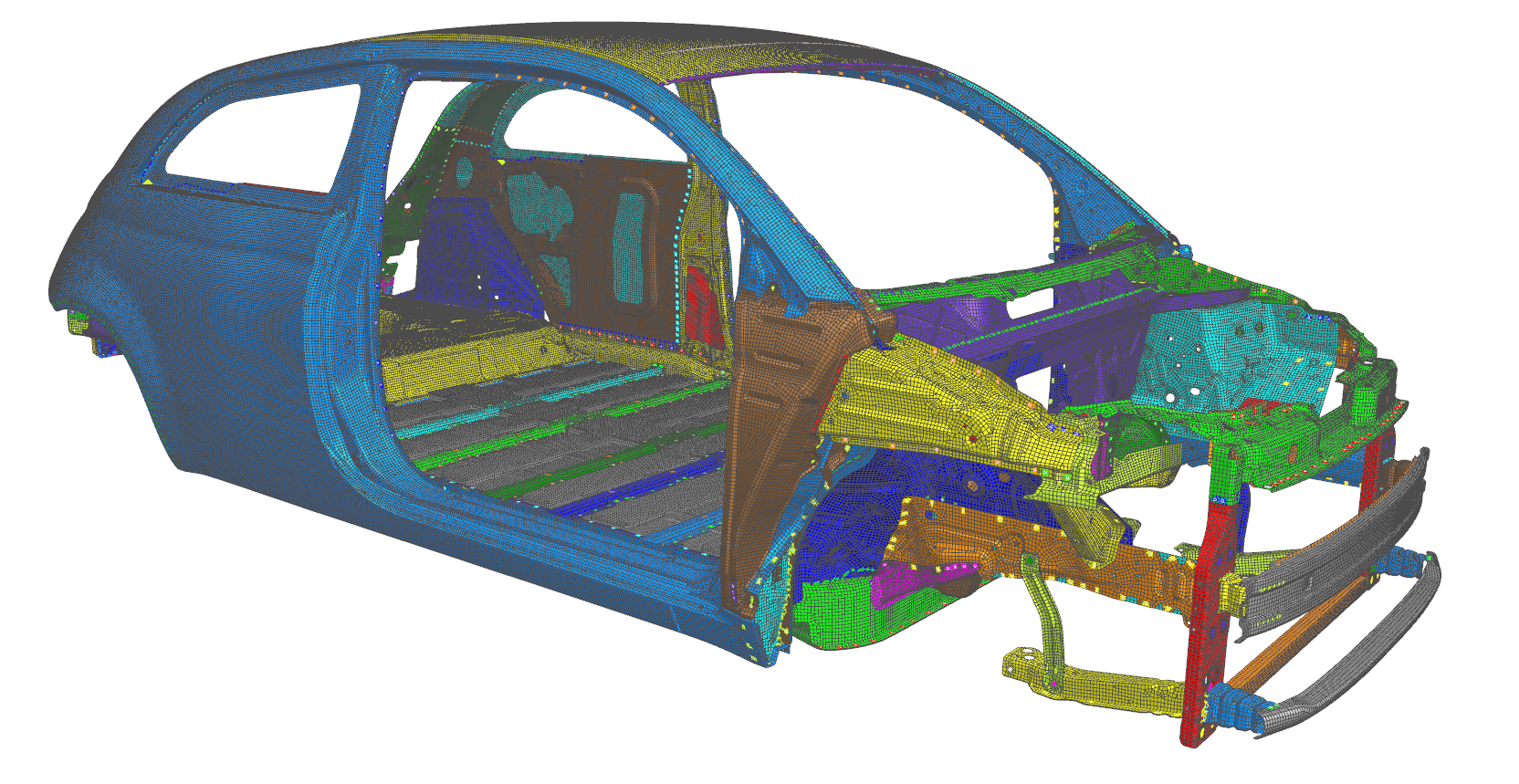
With Simcenter 3D, engineers can evaluate the behaviour of components and structures under loads, stresses, and deformations. Structural analysis capabilities include linear and multi-stage non-linear calculations.
Structural dynamics tools support the analysis of vibrations and dynamic loads, including tasks related to noise, vibration, and harshness (NVH), rotordynamics, and structural dynamic response.
Acoustic analysis and durability analysis
Simcenter 3D includes acoustic modelling tools that help evaluate noise sources and propagation, as well as the acoustic characteristics of products. Various approaches for acoustic and vibro-acoustic analysis are supported.
Durability and fatigue analysis capabilities enable the investigation of structural behaviour under prolonged or repeated loading. This includes durability analysis of welded joints and composite materials.
Thermal analysis, electromagnetics, and motion
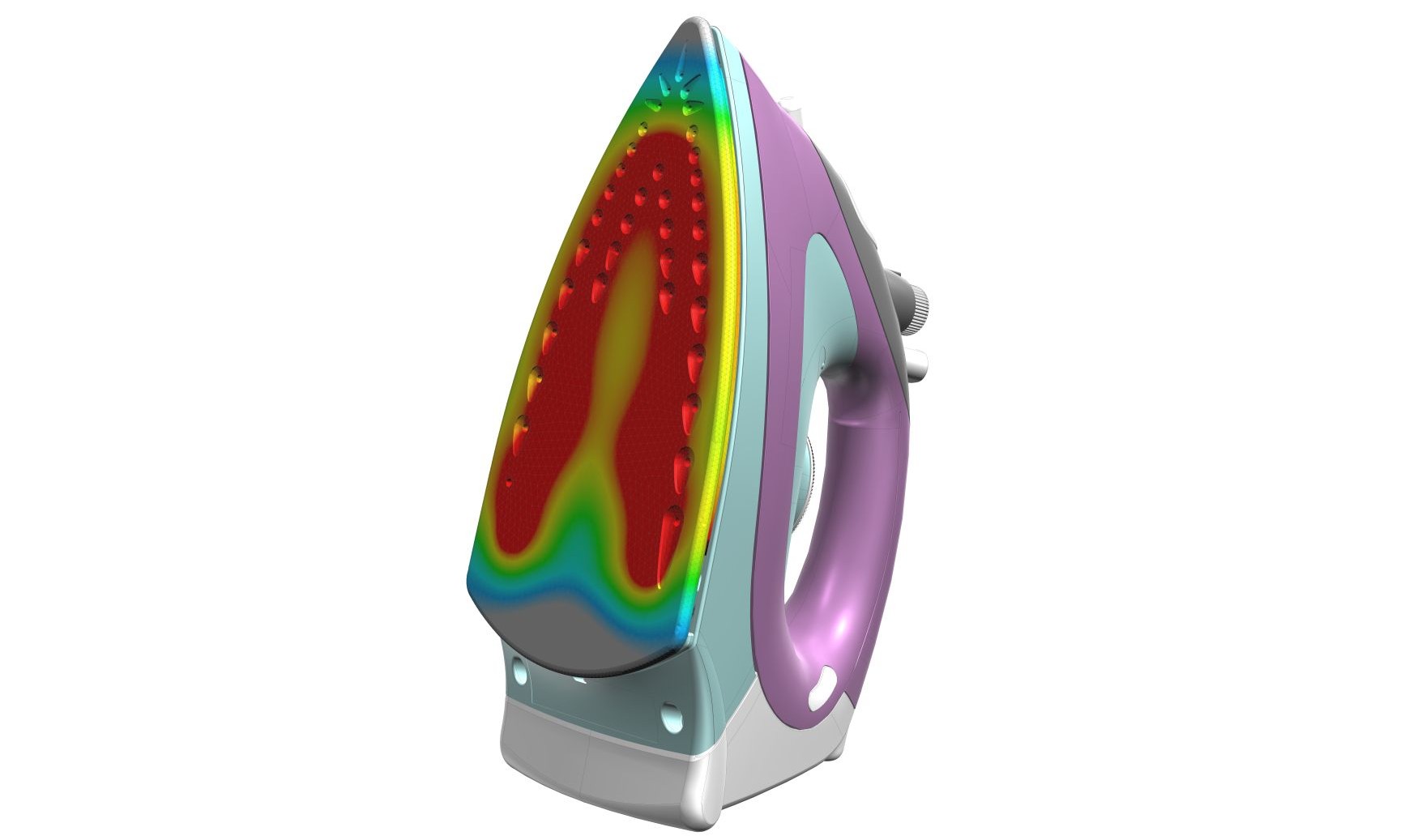
The software provides tools for analysing thermal conduction, convection, and thermal radiation, as well as for modelling electromagnetic processes and electromechanical components.
When designing mechanisms and moving structures, Simcenter 3D enables multibody dynamics simulation, including rigid and flexible bodies, kinematics, transmissions, and interaction with control systems.
Multiphysics simulation and optimisation
Different physical processes often interact with one another and cannot be considered in isolation. Simcenter 3D enables the combination of simulation disciplines within a common environment – for example, thermomechanical analysis, fluid-structure interaction, vibro-acoustics, and electromagnetic-thermal processes.
Integrated design space exploration tools allow the automation of changes to geometry, simulation model parameters, and solution settings. In this way, engineers can compare different design variants and search for optimal solutions.
Simcenter 3D also integrates with the broader product development process, including system simulation and physical testing. This supports the use of simulation models across different stages of the product lifecycle.
Simcenter – connect simulation with the entire development process
Simcenter 3D, Simcenter Amesim, and Simcenter STAR-CCM+ address different engineering tasks, yet share a common goal: to provide better insight into the behaviour and performance of products before they are physically built.
- Simcenter 3D provides an integrated environment for 3D CAE modelling and analysis of structural, dynamic, acoustic, thermal, and other physical processes.
- Simcenter Amesim enables system simulation of mechatronic systems and analysis of the interaction between mechanical, electrical, hydraulic, pneumatic, and control components.
- Simcenter STAR-CCM+ is a solution for CFD and multiphysics simulation, enabling engineers to investigate fluid flows, heat transfer, and other interconnected physical phenomena.
Simulation processes can be connected with other engineering tools and data so that analyses remain part of the overall development process. Integration between system and 3D simulation, as well as the link to physical testing, supports the creation and use of more complete digital product models.
Through the capabilities of Simcenter, engineering teams can explore more design variants, identify potential issues earlier, and make decisions based on simulation results. This helps optimise performance, reduce the need for physical prototypes, and develop complex products more efficiently.
Predict. Analyse. Optimise. With Simcenter from Siemens.
Contact the Soltec team to discuss how Simcenter 3D, Simcenter Amesim, and Simcenter STAR-CCM+ can support the engineering and simulation processes in your organisation.


